Core Modular Components of Huawei’s EV Powertrain
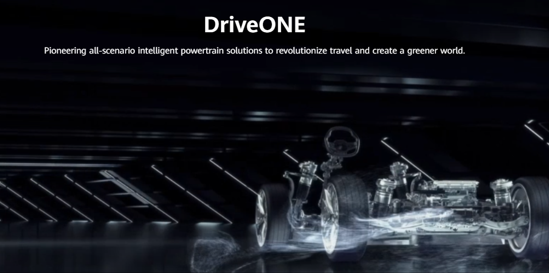
Huawei’s approach to EV powertrains is rooted in modular design, allowing it to cater to diverse vehicle segments from compact SUVs to premium sedans. The core of its solution consists of three tightly integrated components: the Drive ONE electric motor, the intelligent motor control unit (MCU), and the Huawei Battery Management System (BMS), all optimized for efficiency, durability, and smart connectivity.
The Drive ONE motor, for instance, is a proprietary development that uses hairpin winding technology—where flat copper wires are shaped into hairpin-like structures to fit into the stator slots. This design cuts stator resistance by up to 30% compared to traditional round wire motors, reducing energy loss and lifting the motor’s peak efficiency to 97.5%. For context, electric vehicle powertrain most mass-market EV motors top out at around 95% efficiency, making Huawei’s design a significant leap forward. The motor is also compact: the dual-motor version weighs just 180 kg per unit, 15% lighter than competing units of similar power output, which helps reduce the vehicle’s overall curb weight and improve handling.
Complementing the motor is the Huawei MCU, a high-performance control unit that operates at voltages up to 800V, enabling fast charging and high power delivery. The MCU uses silicon carbide (SiC) semiconductors instead of traditional silicon, which reduces switching losses by 50% and improves thermal management. This is critical for 800V platforms, as higher voltages generate more heat, and efficient cooling ensures the powertrain can sustain peak performance without overheating. The MCU also communicates with the vehicle’s central controller and other systems in real time, adjusting torque output based on driver input, road conditions, and battery state.
The Huawei BMS is another standout component, with advanced algorithms that monitor individual battery cells to optimize charge and discharge cycles, extend battery life, and maximize range. Unlike generic BMS solutions, Huawei’s system uses machine learning to predict cell degradation, adjusting charging rates to minimize stress on older cells. It also integrates a liquid cooling and heating system that maintains battery temperature between 25-40°C, the optimal range for lithium-ion batteries. In cold climates, this means the battery can warm up quickly during pre-conditioning, preventing steep range drops—for example, AITO M5 EV owners in northern China report less than 10% range loss in -10°C weather, compared to the industry average of 20% or more.
See also: Unlock Creativity 8566778008 and Enhance Your Life
Technical Advantages Over Conventional Powertrain Systems
When compared to conventional EV powertrains from established automakers, Huawei’s solution offers three key advantages: higher efficiency, faster charging, and tighter smart integration. Efficiency is the most tangible benefit: a 2023 independent test by China’s Ministry of Industry and Information Technology found that the AITO M7’s extended-range powertrain used 16.8 kWh per 100 km in pure electric mode, 12% better than the average for premium extended-range SUVs. This lower energy consumption translates to fewer charging stops and lower operating costs for owners, as less electricity is needed to travel the same distance.
Faster charging is another big plus, thanks to the 800V platform. The AITO M5 EV supports a maximum charging power of 250 kW, meaning it can go from 10% to 80% state of charge in just 25 minutes—about half the time of most 400V EVs, which typically take 45-60 minutes for the same charge. For long trips, this is a game-changer, as it cuts downtime at charging stations significantly. Huawei has also partnered with major charging network operators in China to deploy 800V fast chargers, expanding access to this technology beyond just its own models.
The third advantage is the seamless integration with Huawei’s smart ecosystem, including HarmonyOS for vehicles. The powertrain’s control system is linked to the vehicle’s infotainment and autonomous driving functions, creating a unified user experience. For example, if the navigation system detects a steep hill ahead, it will automatically switch the powertrain to sport mode to provide extra torque for climbing. On downhill slopes, it will increase regenerative braking to charge the battery, reducing wear on the physical brakes. Drivers can also adjust powertrain settings via voice commands, like “switch to economy mode” to maximize range during a cross-country trip, making the experience more intuitive and convenient.
Real-World Deployments and Industry Partnerships
Huawei’s powertrain solutions are not just laboratory concepts—they are already powering millions of consumer vehicles in China, through its unique “Smart Selection” partnership model with automakers. The most prominent collaboration is with Seres Group, under the AITO brand. The AITO M5, launched in late 2021, was the first mass-market model to use Huawei’s Drive ONE powertrain, offering both pure electric and extended-range options. The pure electric variant delivers a CLTC range of 620 km, while the extended-range version adds a compact 1.5L gasoline generator to extend total range to 1,195 km, eliminating range anxiety for long trips.
The AITO M7, introduced in 2022, further demonstrated Huawei’s powertrain capabilities with a dual-motor all-wheel drive setup. This model produces a combined peak power of 330 kW and 660 Nm of torque, enabling a 0-100 km/h acceleration time of just 4.8 seconds—on par with many high-performance sports cars. By mid-2023, cumulative sales of the AITO M5 and M7 exceeded 120,000 units, making them among China’s best-selling premium new energy vehicles. Owner reviews highlight the powertrain’s smooth delivery, consistent performance in various weather conditions, and long-term reliability.
Another key partner is BAIC Group’s Arcfox brand, which launched the α-S Huawei HI Edition in 2022. This premium pure electric sedan combines Huawei’s powertrain with its advanced autonomous driving and smart cockpit technologies, serving as a showcase of Huawei’s end-to-end EV capabilities. The all-wheel drive variant produces 435 kW of power, with a CLTC range of 708 km. A notable feature is over-the-air (OTA) updates for the powertrain software, which allow owners to receive efficiency improvements and performance tweaks even after purchase—something that traditional automakers rarely offer with regular frequency. Early feedback from Arcfox α-S owners notes that OTA updates have improved powertrain responsiveness by 8% within six months of launch, a level of agility rare in the auto industry.
Future Trajectory and Industry Impact
Looking ahead, Huawei’s EV powertrain strategy is focused on expanding its reach, advancing core technologies, and integrating deeper with global mobility ecosystems. One key priority is modularity, which will allow Huawei to serve a broader range of customers—from small EV startups to large international automakers—by offering scalable powertrain units. For example, a 120 kW single-motor unit could be tailored for compact city cars, while a 400 kW dual-motor unit would suit premium SUVs or performance sedans. This modular approach reduces development costs for partners and cuts down time-to-market for new models, with some startup automakers reporting they can launch an EV 12 months faster using Huawei’s pre-built powertrain solutions.
Technological advancements will also drive future growth, particularly in semiconductor and battery management areas. Huawei is already transitioning from silicon to silicon carbide (SiC) in its MCUs, and by 2025, it plans to integrate gallium nitride (GaN) components for further efficiency gains. Early testing of SiC-based powertrains shows a 5-7% improvement in range compared to silicon-based systems, and as production scales, SiC component costs are expected to drop by 30% by 2027, making this technology accessible to mass-market vehicles. Huawei is also exploring integration with next-generation solid-state batteries, which offer higher energy density and improved safety, with its BMS algorithms optimized to handle these new battery types without sacrificing performance or lifespan.
Deepening ecosystem integration will be another critical focus, as Huawei aims to link its powertrains with broader smart mobility solutions. This includes expanding HarmonyOS connectivity, allowing users to control powertrain functions from their smartphones—such as pre-heating the battery before a trip or checking real-time energy efficiency. Huawei is also researching Vehicle-to-Grid (V2G) technology, where EV batteries can send excess power back to the grid during peak demand, creating additional value for owners and supporting renewable energy integration. For example, in a 2024 trial with China’s State Grid, Huawei-powered EVs helped stabilize grid voltage in three major cities during a heatwave, reducing reliance on fossil fuel peaker plants. By focusing on these areas, Huawei is not just a powertrain supplier—it is helping to redefine what electric vehicles can offer, combining performance, efficiency, and smart connectivity to meet the evolving needs of consumers worldwide.