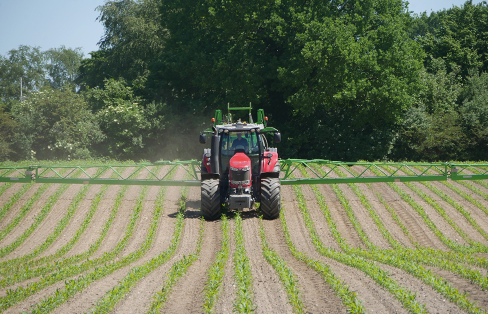
For many decades, tractor operation relied completely on manual steering. Farmers guided machines across fields using visual judgment and experience. Straight rows were created by focusing on distant landmarks or previously marked lines in the soil. While this method worked for generations, it demanded constant attention and skill from the operator.
Manual steering also meant that minor mistakes were unavoidable. Slight overlaps between passes could waste seeds, fertilizer, or chemicals. In other cases, small gaps might appear between rows, reducing planting efficiency. Over large farming areas, these small inconsistencies could add up to significant losses in both time and resources.
As farms expanded and modern agriculture required greater productivity, the limitations of manual steering became more obvious.
The Rise of Technology in Agriculture
Agriculture has steadily integrated technology into everyday operations. From advanced machinery to digital monitoring tools, modern farming focuses on efficiency and accuracy. GPS guidance systems became one of the most important technological innovations for tractors.
Global Positioning System technology allows equipment to determine its exact location in a field using satellite signals. When installed on tractors, GPS systems guide machinery along precise paths while maintaining consistent spacing between rows.
This shift represents a major technological upgrade for farmers who previously relied entirely on visual alignment and manual steering.
How GPS Guidance Works in Modern Tractors
GPS guidance systems combine satellite data, onboard sensors, and digital displays to assist tractor navigation. Farmers can create digital maps of their fields and define driving paths for different operations such as planting, spraying, and harvesting.
The system displays guidance lines on a screen inside the tractor cabin. Operators simply follow the displayed path while the system tracks the machine’s location in real time. More advanced setups include automatic steering features that guide the tractor with minimal manual control.
This level of guidance ensures that tractors maintain consistent direction and spacing, which improves the overall quality of field operations.
Reduced Waste Through Accurate Field Coverage
One of the biggest advantages of GPS guided tractors is improved efficiency in resource use. When farmers rely on manual steering, small overlaps or missed sections can lead to wasted inputs. Seeds, fertilizers, and crop protection products may be applied unevenly across the field.
GPS guidance reduces these inefficiencies by ensuring accurate coverage. Every pass across the field is precisely measured and aligned with the previous one. As a result, farmers use inputs more effectively and reduce unnecessary costs.
This improved accuracy also contributes to healthier crop development because resources are distributed more evenly.
Better Comfort and Reduced Operator Fatigue
Operating tractors manually for long hours can be physically demanding. Maintaining perfectly straight rows requires continuous concentration and steering adjustments. Over time, this level of focus can lead to fatigue and reduced productivity.
GPS guidance systems help reduce this burden by assisting with navigation. Farmers can focus more on monitoring equipment performance and field conditions instead of constantly adjusting steering direction.
This improvement in operator comfort is especially valuable during busy planting and harvesting seasons when long working hours are common.
Evaluating the Cost of GPS Farming Technology
As GPS technology becomes more popular in agriculture, farmers often research the best tractor GPS system price before deciding on a system. The cost of these systems depends on several factors, including accuracy level, guidance features, and compatibility with existing machinery.
Basic systems provide visual guidance support, while more advanced solutions include automatic steering and enhanced positioning accuracy. Farmers typically select a system that matches the size of their operation and the complexity of their farming activities.
Although the initial investment can vary, many farmers see long-term savings through reduced fuel consumption, lower input waste, and improved field productivity.
See also: Tactical Builder 613724305 Market Expansion
The Role of GPS in Precision Agriculture
GPS guidance is a central component of precision agriculture. Precision farming focuses on using technology and data to manage crops more efficiently and sustainably. By integrating GPS with digital mapping tools and farm management software, farmers can track field performance and make informed decisions.
With this technology, farmers can better control food growth and only put inputs where they are needed. Over time, these changes help raise yields while saving important resources like water and soil.
Moving Toward a Smarter Farming Future
The transition from manual steering to GPS guidance highlights how rapidly agriculture is evolving. What once depended solely on human skill is now supported by advanced digital technology.
As farming continues to adopt new innovations such as automated equipment and data-driven analysis, GPS guidance will remain a key tool in improving efficiency and productivity. The shift toward technology-assisted farming shows how modern agriculture is becoming smarter, more precise, and better prepared to meet the challenges of the future.